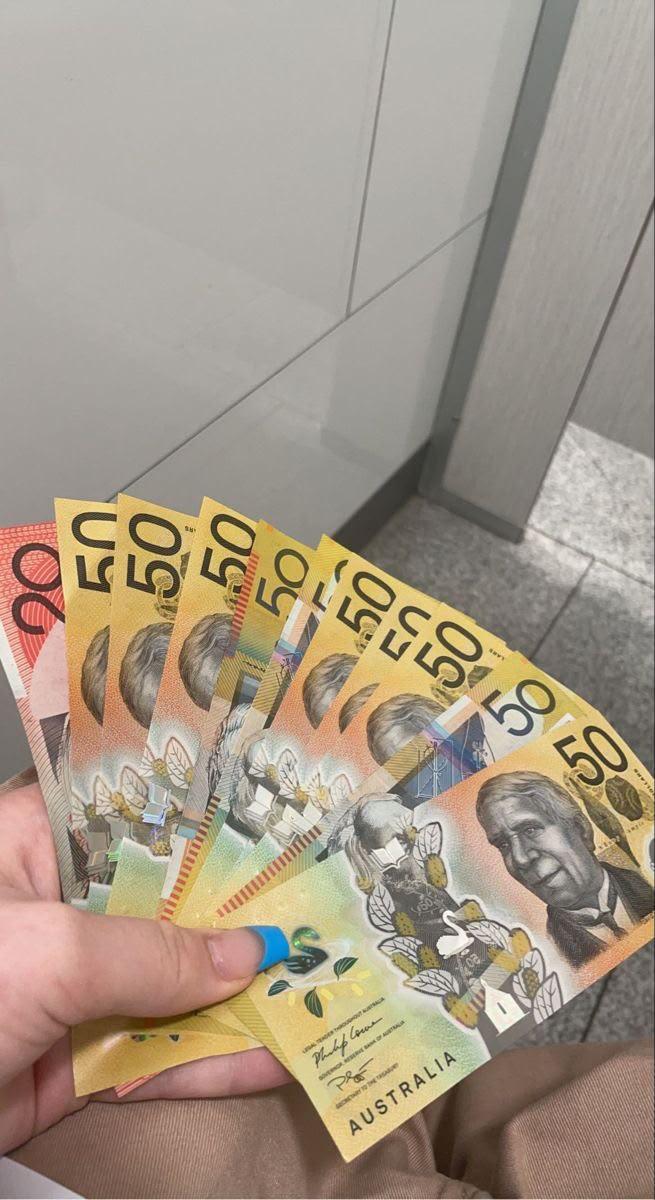
If you have ever opened a second-hand Monopoly box and found it short of $50 notes, you know why people search for money amounts for Monopoly. The game's money is part of the fun, and the numbers matter: how many notes are in the bank, what each denomination is for and how many of each should be in the box. This guide explains the typical denominations, how the bank works, how to count a set and how to replace missing notes with Australian play money. Editions and countries differ, so use your own rulebook as the final authority. Monopoly is a registered trademark of its owner, and PROPPS is not connected with the game.
The short answer
A standard edition has notes from $1 to $500, a starting hand of $1,500 per player and a bank that holds the rest. If notes are missing, a small play money set in similar denominations will do. See our Australian play money range for ready-made sets, and read how much money you start with in Monopoly for the starting hand.
The usual Monopoly denominations
Standard editions use these notes:
| Denomination | Typical use |
|---|---|
| $1 | Change, small fees |
| $5 | Rent on cheap properties, change |
| $10 | Rent, small fines |
| $20 | Common payments, salary part |
| $50 | Property purchases, rent |
| $100 | Larger purchases |
| $500 | Premium purchases, big rent |
Some editions add a $200 salary note or a different mix, so check the rules. The idea is a range that lets players pay exactly and receive change.
Counting the bank
Most boxes contain enough notes for a normal game of up to eight players. The exact number of each denomination is printed in the rules, or can be counted from a full set. If your box is second-hand, count the notes by denomination before the first game and write down what is missing. This stops arguments later.
What each denomination is for
- $1 and $5 notes are the most important for change. If they run out, the game slows down.
- $10 and $20 notes handle most rent and fees.
- $50 and $100 notes pay for properties and houses.
- $500 notes are for the biggest deals and hotels.
Smaller notes run out first in a long game. Keep spares.
What to do if notes are missing
There are three simple fixes.
1. IOUs. Write the amount on paper. Fast, but messy.
2. Mix in a play money set. Add a small set in the denominations you are short of, marked so you know which notes are the add-ins.
3. Swap in a full replacement set. Useful if your original is badly worn.
For a family game, a play money set in Australian-style notes is the easiest solution. The event and party prop cash pack has the common denominations, and the guide to Monopoly money vs Australian play money explains how they compare.
Printing a replacement set
A printable Monopoly money sheet can save a game night, but it is slow to cut and short-lived. See play money printouts for a comparison of printing and buying. Whatever you print should be clearly game money, not a copy of real currency.
Running the bank well
A good banker keeps the bank tidy. Sort notes by denomination in a tray. Keep their own money separate. Announce every payment. Count notes into players' hands and out of the bank. These small habits prevent most arguments and make the game faster.
Teaching with Monopoly money
Monopoly money is a useful teaching tool. Children can count by fives, add rent and calculate change. A teacher can set tasks such as making $265 using the fewest notes. Our guides to classroom play money lessons and toy shop money games show how.
Keep every set clearly play money
Whether you use the original notes or a replacement set, the money should be clearly play. The Commonwealth Crimes (Currency) Act 1981 covers counterfeit currency, and the Reserve Bank publishes guidance on banknote reproductions. PROPPS notes carry a clear non-legal-tender marking. Our compliance page explains the standard.
Common mistakes
- Not counting a second-hand set. Missing notes surface mid-game.
- Running out of $1 and $5 notes. Keep spares.
- Mixing add-in notes without marking them. Keep them in a separate tray.
- Letting notes get wet. Paper curls and tears.
How the bank is meant to work The bank is the central store of money in the game. It pays salary when players pass Go, collects taxes and fines and sells properties. The bank is not supposed to run out of money, and in most rulebooks, if it does, the banker may issue more using paper or IOUs. A well-stocked bank keeps the game moving, which is why people want to know the right number of notes.
Why small notes run out first The $1 and $5 notes are used for rent and change in nearly every turn, so they run out before the larger notes do. When this happens, players hand over a large note and wait for change that the banker cannot give. Having a small play money set in $1, $5 and $10 notes solves this. If your game keeps running short of small notes, add a spare bag to the bank.
Counting a worn set Over time, a set loses notes. Count by denomination, compare to the rulebook and write down what is missing. If you are short only a few notes, you can use pieces of paper marked with the value as temporary notes. If you are short many, buy a replacement set. Keep a small card in the box listing the full count so you can check quickly.
Using Australian play money as a replacement An Australian-style play money set has notes in $5, $10, $20, $50 and $100, which cover most of the Monopoly range. You may need to treat a $100 note as a $500 note or a $5 note as a $1 note, but you should agree this at the start of the game. Mark the replacement notes with a pen or keep them in their own tray. The most important thing is that every player knows what each note is worth.
Counting rules for large games In games of six or more players, count the bank before play. Allow extra time for the banker to hand out starting hands. Consider appointing a second banker for the properties, so one person handles money and the other handles deeds. This keeps the game fast and avoids mistakes.
Teaching number sense with Monopoly notes Monopoly notes make a great maths tool. Ask children to sort the notes by value, count them in groups of five, or make a target amount with the fewest notes. For older students, ask them to work out the total in the bank. These tasks need no preparation and use materials you already have. See our guide to [classroom play money lessons](/blog/fake-money-for-classroom-play-money-lessons-by-year-level/) for more activities.
Care and storage Store the notes in the box with a divider for each denomination. Keep the box flat and dry. If the notes are curled, press them under a book overnight. If they are sticky or torn, replace them. A well-kept set lasts for years, and a small play money pack in the cupboard means a missing note never ends a game.
Quick reference for game night Keep a small card in the box with the key numbers: the starting hand for each player, the salary for passing Go, the usual denominations and any house rules you have agreed. Also note how many notes of each value are meant to be in the box, so you can check a second-hand set at a glance. Update the card when you add replacement notes. A card like this takes a few minutes to make and saves the same argument at the start of every game.
Making your own spare bank If your box keeps running short, assemble a spare bank in a zip bag: twenty $1 notes, twenty $5 notes, fifteen $10 notes and ten $20 notes from a play money set. Label it spare bank and keep it with the game. When the main bank runs low, tip in the spare and carry on. It is the cheapest and fastest fix for the most common problem in long games.
Where to go next
Browse the play money range, see Kmart play money vs a prop supplier or contact the studio. PROPPS orders start at the $150 AUD minimum, delivery is free from $500 AUD and cryptocurrency payments receive a 10% discount. We invoice and ship from Eltham, Melbourne by Australia Post Express with a signature on delivery. See the shipping policy for times and the refund policy for the 3 to 8 business day refund window.